
Build a Compliant Website Privacy Policy in Minutes
Answer a few questions and Consently writes your privacy policy, a strong starting point you can edit, no lawyer or developer needed.
Answer a few questions and Consently writes your privacy policy, a strong starting point you can edit, no lawyer or developer needed.



Consently builds your policy from a short questionnaire about how your site handles data.
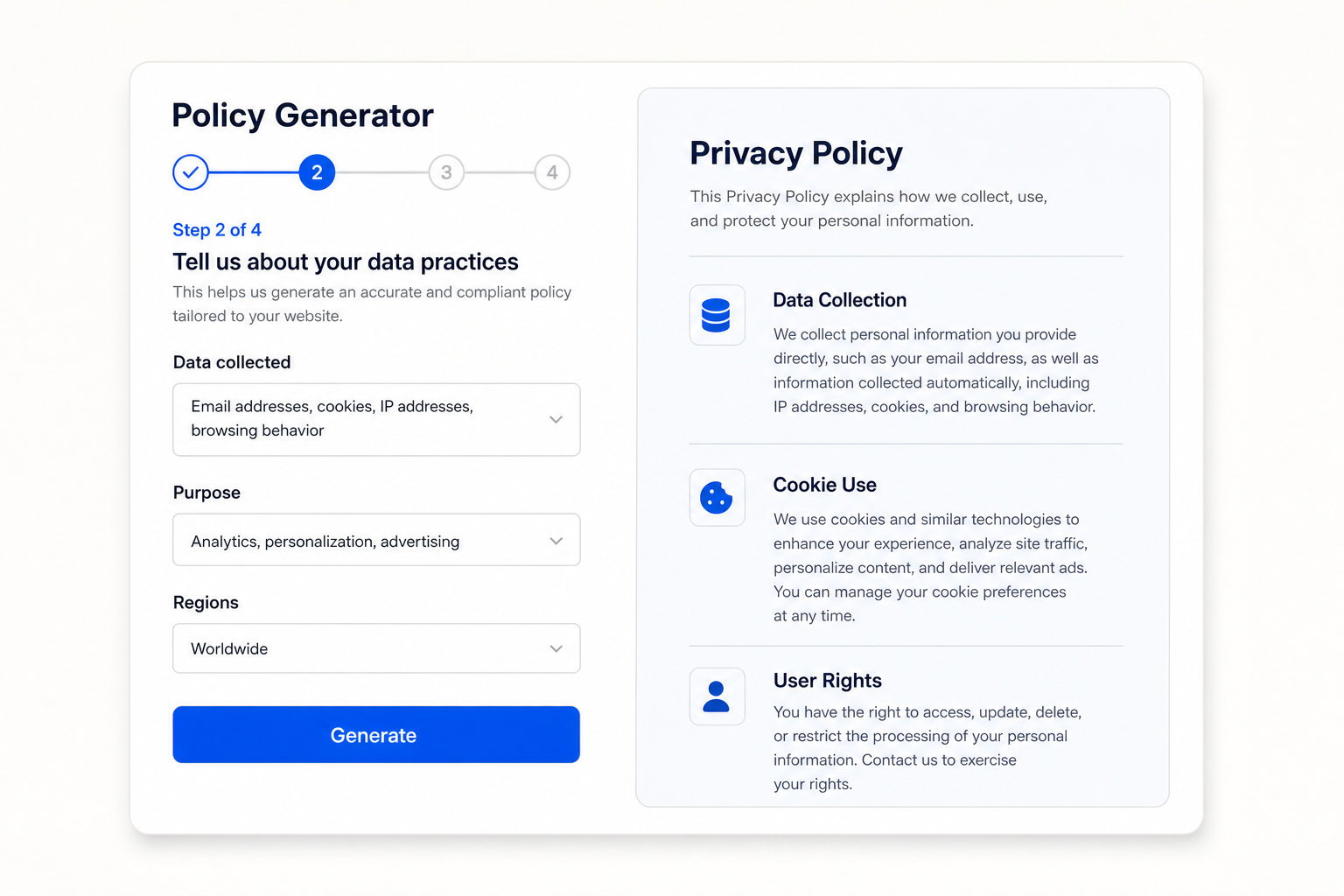
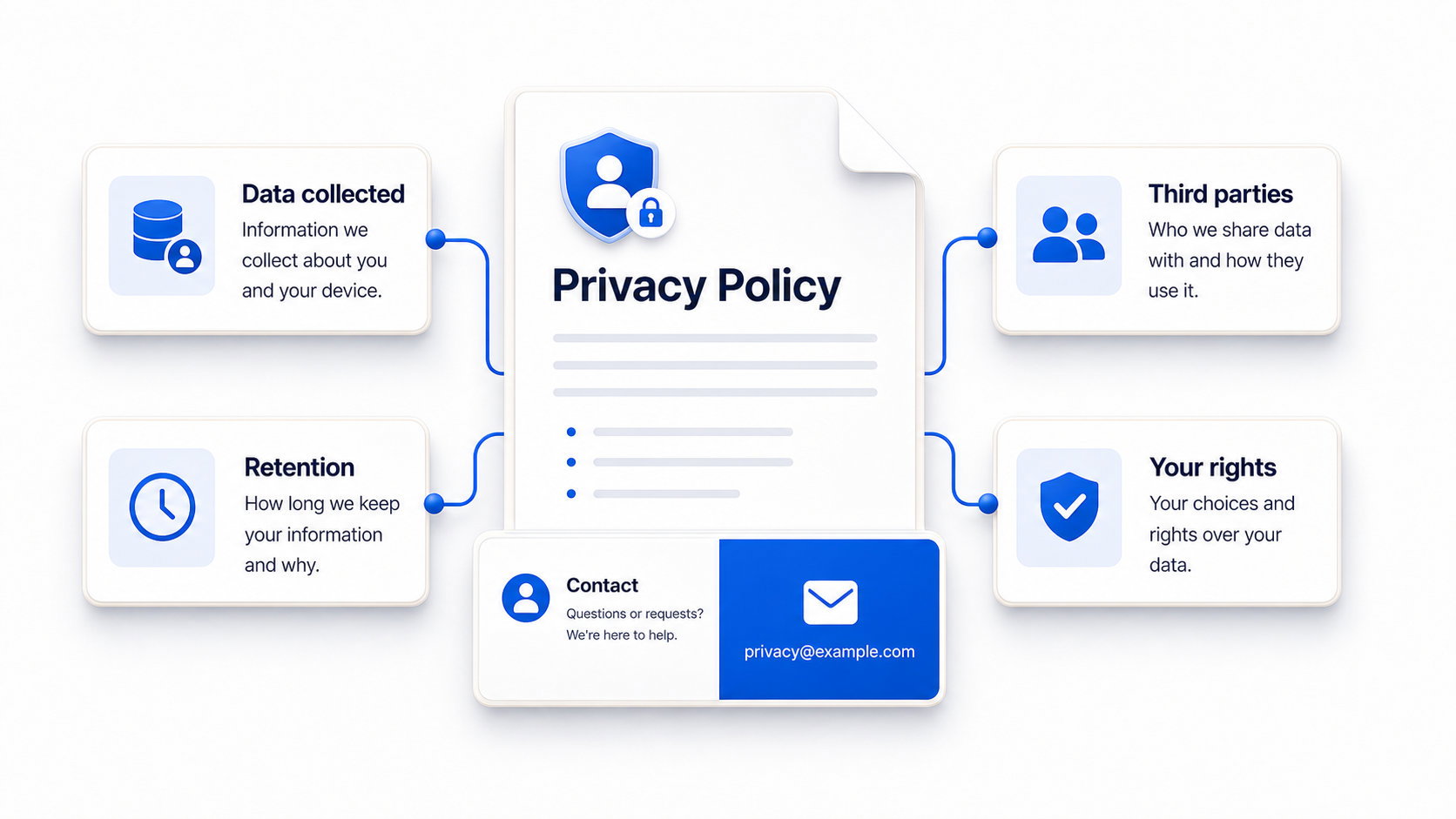
A compliant privacy policy has to spell out your data practices, and Consently writes each one.
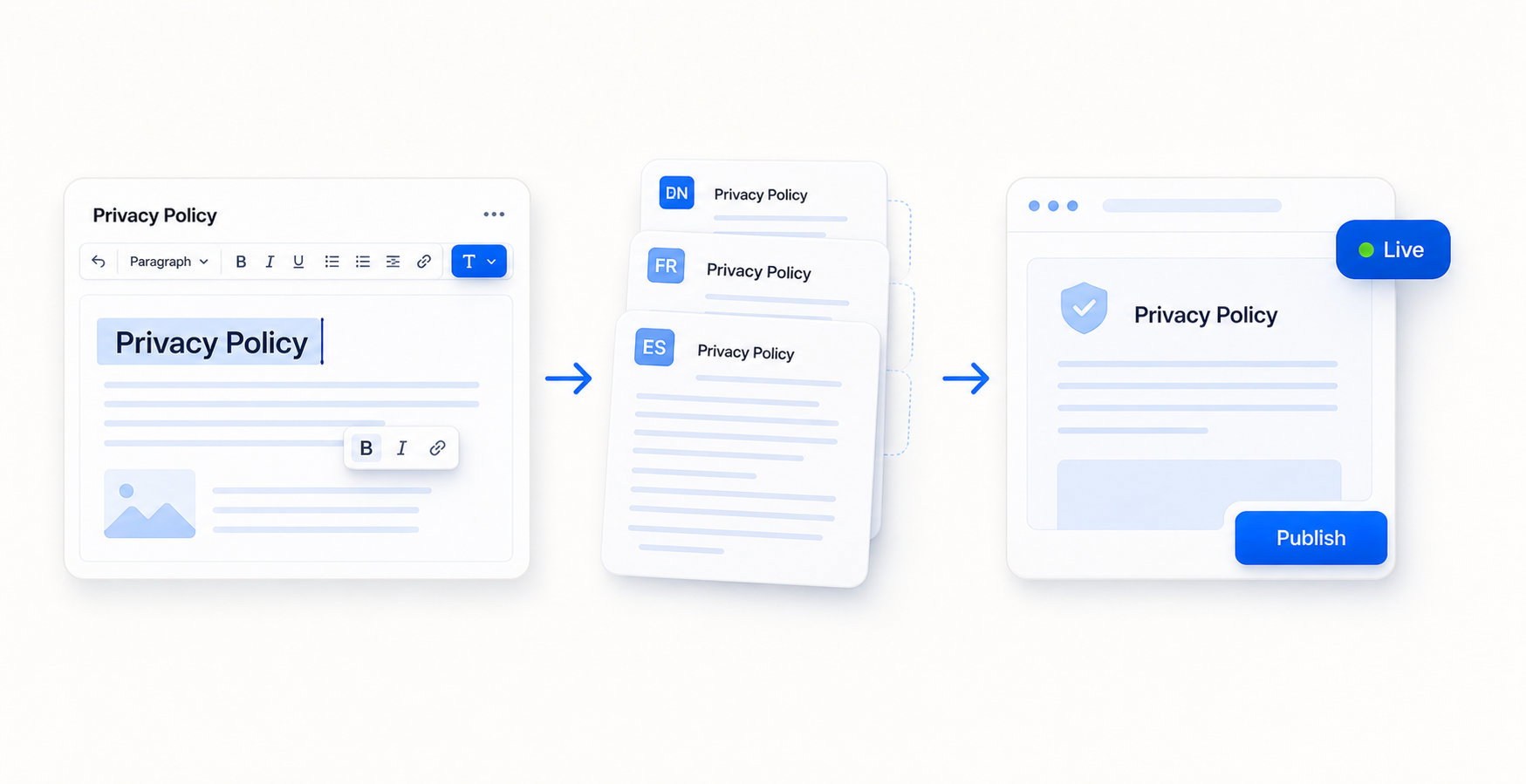
Once generated, your policy is yours to refine, localize, and publish however your site is built.

One or ten, one account.
Script, plugin, Shopify app, or GTM.

Consently blocks trackers until consent.
You pick the regions that apply, and Consently builds your policy to help you meet the major privacy laws.
Opt-in disclosures for EU and UK visitors, from lawful basis to data-subject rights.
Notice and opt-out disclosures for major US state privacy laws.
Listed support for further regimes as your audience grows.
Every feature is on every plan, so you pay for domains and pageviews, not unlocks.
Generate a full cookie table from your actual scan.
Cover usage, liability, and governing law in the same account.
Run your banner, scanner, and consent logs from one place.
You can generate, edit, and preview your privacy policy on a 14-day free trial with no credit card. Keeping it published comes with a plan, and every plan includes all three policy generators.
A privacy policy should disclose what personal data you collect and why. It should also cover who you share it with, how long you keep it, the rights visitors have, and your contact details. Consently writes each of these disclosures for you. It states visitor rights in the policy but does not process data-subject requests on your behalf.
Usually yes. A privacy policy covers all personal data, while a cookie policy covers cookies and trackers with the detailed table many laws expect. Consently generates both in the same account.
Consently maintains its templates as laws evolve, and you regenerate or edit your policy when your data practices change. It does not rewrite itself for each visitor’s location.
Consently generates policies for websites with a connected domain. If your app has a website or landing page, generate it there. Standalone app generation without a domain is not currently supported.
For most standard websites, no. Consently writes a tailored policy from your answers that helps you meet GDPR and CCPA. It is compliance assistance, not legal advice, so review it and consult a lawyer for unusual or high-risk data practices.
A template gives you generic blanks to fill in by hand. Consently asks about your actual data practices and writes the policy to match. You can then regenerate it whenever things change.
Link it in your footer, in any sign-up or checkout form, and inside your cookie banner. A hosted or embedded Consently policy can be linked from all of them.
If your site collects any personal data, even a name or email through a form or analytics, most privacy laws expect one. Whether you need one depends on your site and audience, so check whether you need a privacy policy for your case.
No. It is compliance assistance that gives you a strong, tailored starting point. Review it for your situation, especially in regulated industries.
A privacy policy only protects you if it reflects how your site really handles data. Consently writes it from your answers and keeps it easy to update.
Free 14-day trial. No credit card.

Built with ❤️ by the team @ Dorik.com
Follow us:
©2026 Dorik, Inc. All rights reserved.